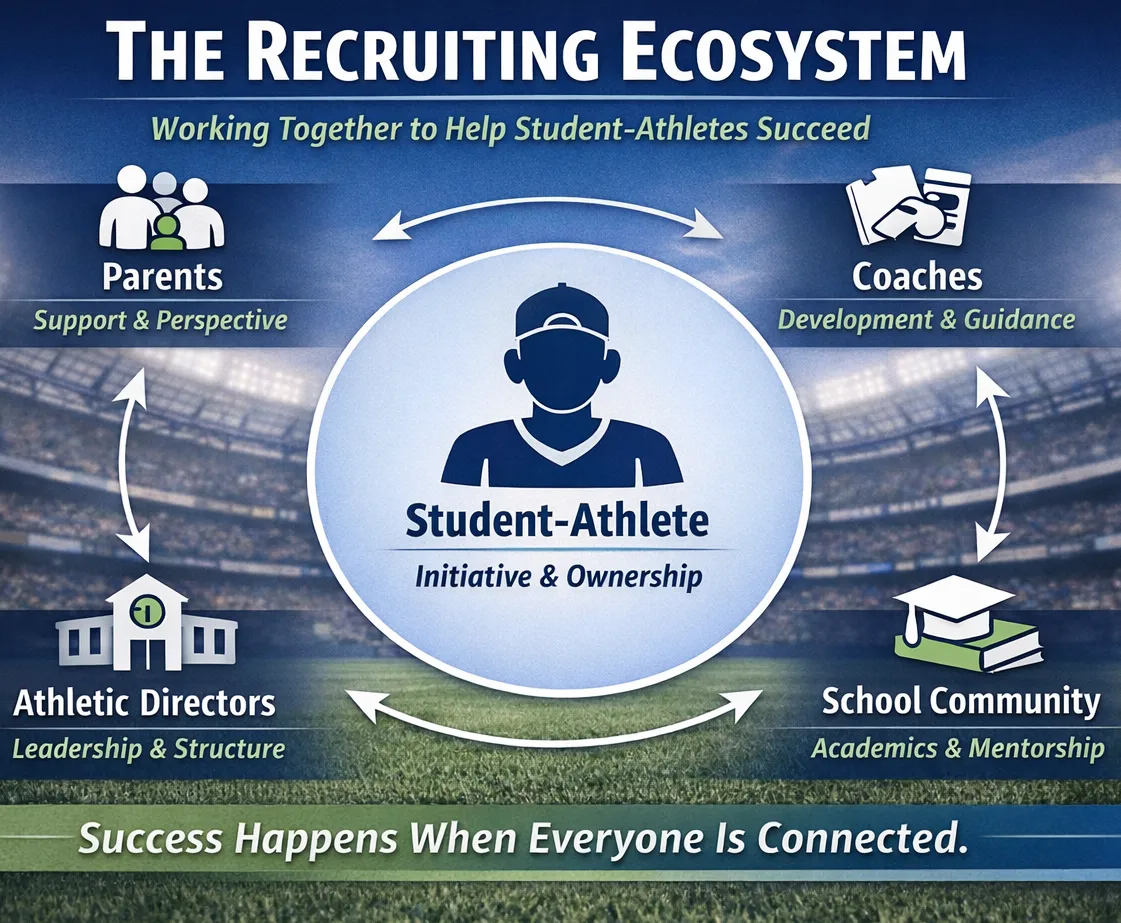
The Recruiting Ecosystem
The Recruiting Ecosystem: Who’s Really Involved in the Process
When people think about college recruiting, they often picture one athlete sending emails to coaches and hoping to get noticed. But the truth is, recruiting is rarely a solo effort.
Behind every student-athlete navigating the recruiting process is an entire ecosystem of people helping guide, support, and shape their journey.
Understanding this ecosystem is one of the most important things a family can do when preparing for college athletics.
The Athlete: The Center of the Ecosystem
At the center of the recruiting ecosystem is the student-athlete.
Everything begins with the athlete:
effort
development
communication
leadership
character
No system, platform, or mentor can replace the responsibility the athlete carries. Recruiting opportunities grow when athletes take ownership of their process.
Family: The Foundation of Support
Families play a critical role in the recruiting ecosystem.
They provide:
emotional support
perspective during difficult moments
accountability
guidance when decisions need to be made
The most successful recruiting journeys often involve parents who support the process without trying to control it.
High School and Club Coaches: The Trusted Voice
Coaches are often the most trusted voices in the recruiting process.
They help athletes:
evaluate their realistic level of play
identify programs that may be a good fit
communicate with college programs
advocate for athletes when appropriate
A coach’s recommendation can carry a lot of weight with college programs.
Athletic Directors and Schools: The Support Structure
Athletic departments and schools provide the environment where student-athletes develop.
They help create:
academic accountability
school culture
leadership opportunities
exposure through competition
When athletic departments actively support recruitment education, the entire ecosystem becomes stronger.
Recruiting Platforms: The Visibility Layer
Technology now plays an important role in recruiting.
Software platforms allow athletes to:
build player profiles
share film
communicate with coaches
organize their outreach
But technology alone won’t create opportunities. These tools work best when athletes understand how to use them strategically.
Mentors and Recruitment Education: The Guide
Many families feel overwhelmed by the recruiting process because they simply haven’t experienced it before. This is where recruitment education and mentorship become valuable.
Guidance helps athletes:
understand expectations
build strong profiles
communicate with coaches
stay organized and proactive
The right guidance can help bring clarity to a process that often feels confusing.
The Big Picture
When the recruiting ecosystem works well, everyone understands their role.
The athlete takes ownership.
Families provide support.
Coaches offer perspective.
Schools create structure.
Tools provide visibility.
Mentors provide guidance.
Together, they create a pathway for student-athletes to pursue opportunities at the next level.
Final Thought
Recruiting is rarely about one moment or one highlight. It’s influenced by people through all stages of the process.
When the ecosystem is strong, opportunities become easier to navigate.
